

Have you been feeling different lately—more sensitive, more introspective, less interested in certain relationships, or increasingly drawn toward spirituality and a deeper sense of purpose?
You may be wondering whether these changes are connected to a spiritual awakening.
Spiritual awakening can be described as a period of deep inner transformation in which the way you see yourself, your relationships, your beliefs, and your purpose begins to change. For some people, this process can feel peaceful and inspiring. For others, it can be confusing, lonely, emotionally challenging, and even painful.
In my spiritual understanding, awakening is not simply about becoming more spiritual. It is about becoming more aware of who you are beneath old patterns, fears, beliefs, and identities.
If you prefer watching rather than reading, I explain these experiences in Hindi in the video below.
🎥 Watch the Hindi video: Spiritual Awakening and the Transformation Process
Please note: Spiritual awakening is a spiritual framework, and experiences vary greatly from person to person. Difficult emotional or psychological symptoms should not automatically be interpreted as spiritual awakening and may also have other causes.
What Is Spiritual Awakening?
Spiritual awakening is often described as a shift in consciousness or awareness. You may begin questioning beliefs that you previously accepted without thinking. Things that once seemed extremely important may suddenly lose their meaning, while questions about purpose, identity, spirituality, and inner peace become more important.
From my perspective, awakening can feel like an internal rebuilding process.
Before transformation begins, you may first become aware of the things within you that need healing.
Old emotional wounds, fears, limiting beliefs, unresolved experiences, and patterns that you have carried for years may begin coming into your awareness.
This does not necessarily mean that something is wrong with you.
It can be an invitation to look inward.
15 Signs You May Be Going Through a Spiritual Awakening
Everyone’s awakening experience is different. You may experience several of these signs, only a few, or none of them.
1. You Begin Questioning Your Old Identity
One of the biggest changes can be the feeling that the person you used to be no longer represents who you are becoming.
You may start questioning:
- What do I really want?
- Why am I living this way?
- What makes me genuinely happy?
- Am I following my own path or someone else’s expectations?
- What is my deeper purpose?
You may still have the same name, career, family, and responsibilities, but internally, something feels different.
Your old identity may no longer feel comfortable.
2. Old Emotional Wounds Come to the Surface
During a period of deep self-reflection, memories and emotions connected to earlier experiences may become more noticeable.
Perhaps you experienced bullying, rejection, emotional pain, fear, abuse, abandonment, or another difficult experience earlier in life.
As you become more aware, you may recognize how those experiences influenced your beliefs and reactions.
For example, you may realize:
“I have been reacting from fear rather than responding from who I am today.”
This awareness can become an important part of personal growth.
Healing does not mean pretending the past never happened. It can mean learning to understand your experiences, process your emotions, and develop healthier responses.
3. You Feel Drawn Toward Inner Healing
You may suddenly become interested in meditation, spirituality, journaling, energy healing, prayer, breathwork, self-reflection, or other practices that help you understand yourself.
The focus gradually moves from:
“How can I change everything outside me?”
to:
“What needs to change within me?”
This shift can be one of the most meaningful parts of an awakening journey.
4. You Experience Periods of Loneliness or Isolation
One of the experiences people commonly associate with spiritual awakening is loneliness.
Your social circle may change. You may no longer enjoy certain conversations or environments. You may feel less connected to people you once felt close to.
Sometimes this can happen because your interests and priorities are changing.
You may begin enjoying quiet time more than constant social activity.
However, loneliness should not automatically be interpreted as proof that you are spiritually awakening. If isolation is persistent or causing significant distress, reaching out for appropriate emotional or professional support can be important.
5. Your Relationships Begin to Change
As your values change, your relationships may change too.
You may become more aware of relationships that leave you feeling drained, controlled, criticized, or disconnected from yourself.
You may also become less interested in trying to convince people to understand you.
Instead of asking:
“Why don’t they understand me?”
you may begin asking:
“Is this relationship healthy for me?”
Some relationships may naturally become more distant, while others may become deeper and more authentic.
6. Your Definition of Success Changes
Before inner transformation, success may have been primarily connected to money, possessions, status, recognition, or external achievements.
You may still value those things—but your definition of success can become broader.
You may begin wanting:
- Peace
- Freedom
- Meaning
- Emotional stability
- Purpose
- Authentic relationships
- Spiritual connection
- A balanced material and inner life
You don’t necessarily stop wanting a successful material life.
Instead, you may want to build it without sacrificing your inner peace.
7. You Become More Comfortable Being Alone
There is a difference between loneliness and solitude.
Loneliness can feel like something is missing.
Solitude can feel like coming home to yourself.
You may begin enjoying quiet moments where you can meditate, reflect, pray, spend time in nature, or simply sit with your own thoughts.
You may discover that you no longer need constant external stimulation to feel okay
8. Your Intuition Becomes More Important to You
You may begin paying greater attention to your inner voice and gut feelings.
Before making decisions, you may ask yourself:
“What does my intuition tell me?”
Rather than immediately following other people’s opinions, you may start listening to your own sense of direction.
This doesn’t mean abandoning logic.
A balanced approach can involve using both reason and intuition.
9. You Stop Feeling the Need to Prove Yourself
Another possible change is that you become less concerned with proving your worth.
You may stop feeling the need to explain:
- Who you are
- How successful you are
- Why you made a particular decision
- Why someone should understand you
Your sense of worth begins coming more from within.
You may reach a point where you think:
“If someone understands me, that’s wonderful. If they don’t, I don’t need to spend my life proving myself.”
10. Old Habits and Interests Lose Their Appeal
Things you once enjoyed may suddenly stop feeling meaningful.
This might include certain forms of entertainment, conversations, environments, or social activities.
You may find yourself naturally choosing content that helps you learn, reflect, heal, or understand life more deeply.
This doesn’t mean every old interest must disappear.
It simply means your preferences may change as your priorities change.
11. Gratitude Becomes More Natural
As your perspective changes, you may begin noticing things you previously overlooked.
Instead of constantly focusing on what is missing, you may become more aware of what is already present.
You might find yourself feeling grateful for:
- Your life
- Nature
- Small moments
- Supportive people
- Lessons from difficult experiences
- Opportunities to grow
Gratitude can shift your attention from constant dissatisfaction toward appreciation.
12. You Notice More Synchronicities
During spiritual awakening, some people report noticing meaningful coincidences or synchronicities.
For example, you may be thinking deeply about a particular question and then unexpectedly encounter a song, conversation, video, book passage, or number that feels connected to what you were thinking about.
You may experience these moments as meaningful signs.
From a spiritual perspective, some people interpret synchronicities as guidance or confirmation.
At the same time, it is useful to remain grounded. A coincidence can feel personally meaningful without necessarily proving that an external force caused it.
13. You Become Emotionally Stronger
One of the biggest transformations can be the way you respond to difficult situations.
Problems do not necessarily disappear.
Instead, your relationship with problems changes.
You may begin thinking:
“This is difficult, but I can handle it.”
You become less reactive and more capable of pausing before responding.
Emotional strength does not mean becoming emotionless.
It means learning how to experience emotions without allowing every emotion to control your actions.
14. You Feel More Connected to Nature and Spirituality
You may feel increasingly drawn toward nature, meditation, prayer, silence, spiritual practices, or contemplation.
You may begin spending more time asking deeper questions:
Who am I?
Why am I here?
What gives my life meaning?
What kind of person do I want to become?
Your connection with spirituality may become more personal and less dependent on external expectations.
15. You Begin Searching for a Deeper Purpose
Perhaps the most important change is the desire to live with meaning.
You may start feeling that simply surviving is not enough.
You want to create.
You want to serve.
You want to help.
You want to express yourself.
You want to build something meaningful.
In my personal spiritual perspective, some people experience awakening as a period that helps them move closer to what they perceive as their life’s purpose.
Whether you understand this as a soul purpose, calling, service, passion, or simply a meaningful direction in life, the important part is that your life begins to feel more intentional.
Why Can Spiritual Awakening Feel So Painful?
This is one of the biggest questions people ask.
If awakening is supposed to be positive, why can it feel so difficult?
Because transformation is not always comfortable.
Imagine trying to build a completely new identity while simultaneously questioning the beliefs, relationships, habits, and patterns that created your old one.
That can feel like destruction before it feels like creation.
You may experience uncertainty.
You may lose relationships.
You may change careers.
You may question your direction.
You may spend more time alone.
You may realize that some things you once wanted no longer matter to you.
But difficult experiences should not automatically be interpreted as evidence that the universe is intentionally causing suffering for your spiritual growth.
Sometimes difficult life events are simply difficult life events.
The value can come from how you respond, what you learn, and how you choose to rebuild.
What Changes After Spiritual Awakening?
After a period of deep transformation, you may notice that you are no longer the same person.
Your priorities may change.
Your relationships may change.
Your reactions may change.
Your understanding of success may change.
Most importantly, your relationship with yourself may change.
Things that once destroyed your entire day may no longer have the same power over you.
You may become more emotionally intelligent.
You may become more comfortable with uncertainty.
You may develop stronger boundaries.
You may become more peaceful.
And you may finally begin to understand what you genuinely want from your life.
Spiritual Awakening Is Different for Everyone
There is no universal checklist that proves someone is spiritually awakened.
One person may experience profound changes in relationships.
Another may experience a strong desire for solitude.
Someone else may become deeply interested in meditation.
Another person may simply begin questioning their life and values.
You should never compare your spiritual journey with someone else’s.
Your life experiences, beliefs, personality, circumstances, and interpretation of spirituality are unique to you.
Your journey does not need to look like anyone else’s.
What Should You Do If You Are Going Through This Phase?
You don’t have to rush the process.
Give yourself time.
Practice self-reflection.
Journal about your emotions.
Spend time in nature.
Meditate if it feels helpful.
Build healthy relationships.
Create boundaries where necessary.
Take care of your physical health.
And most importantly, stay grounded.
Spirituality should not require you to abandon practical life.
You can pursue your spiritual path while also caring about your finances, career, family, relationships, and physical wellbeing.
You can be spiritual and grounded.
Continue Your Spiritual Awakening Journey
If you are currently going through a spiritual awakening, you may find yourself asking questions that don’t always have immediate answers.
Why am I feeling this way?
Why are my relationships changing?
What am I supposed to learn from this phase?
What is my deeper purpose?
Writing your thoughts and experiences down can help you slow down, reflect, and understand your inner journey more clearly.
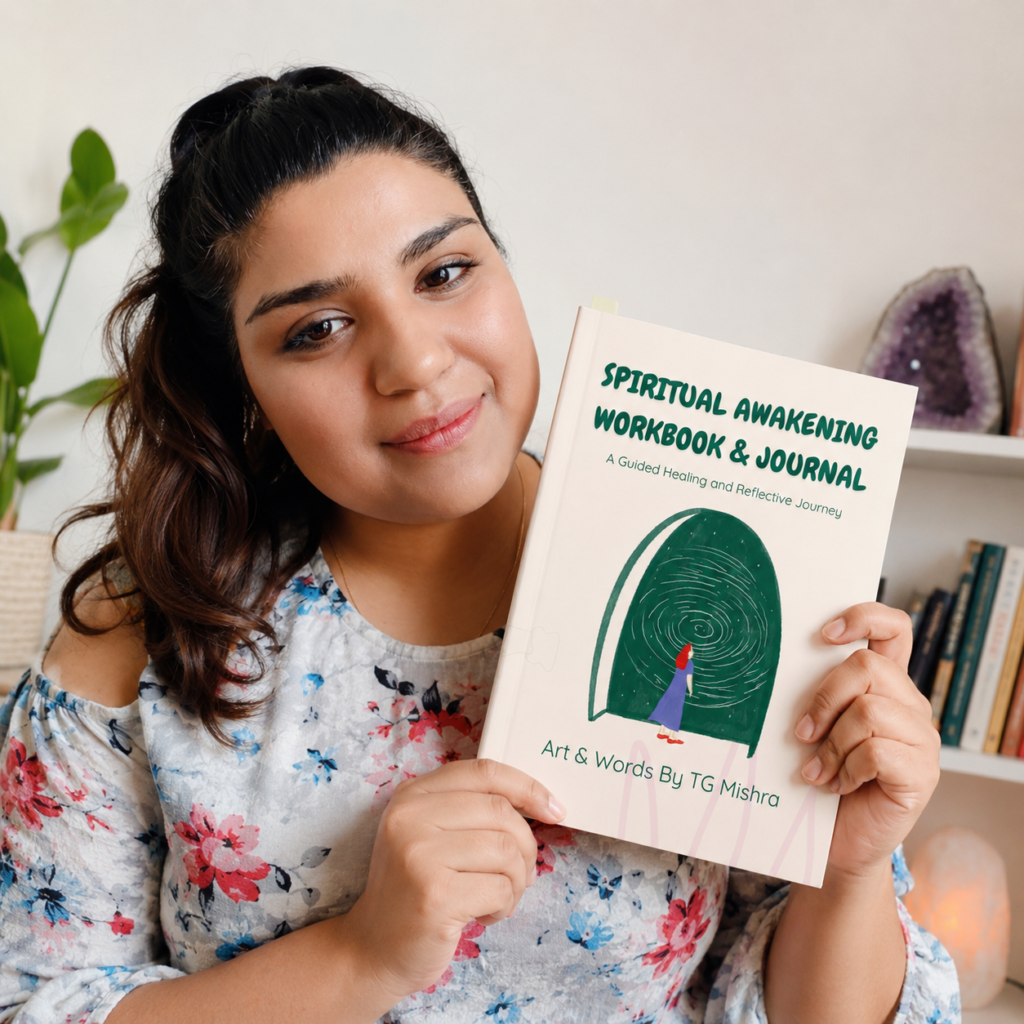
That’s why I created my Spiritual Awakening Journal & Workbook — to give you a dedicated space to explore your thoughts, emotions, beliefs, patterns, and personal transformation.
You can use it alongside your spiritual journey as a place to reflect, journal, and record the changes you are experiencing within yourself.
📖 Explore the Spiritual Awakening Journal & Workbook
Get the Journal & Workbook on Amazon →

As an Amazon Associate, I earn from qualifying purchases.
Final Thoughts
Spiritual awakening is often described as a journey from unconscious patterns toward greater awareness.
It may challenge your identity.
It may change your relationships.
It may bring old emotional wounds into your awareness.
It may make you question what success means.
It may make solitude feel more valuable.
And it may eventually lead you toward a deeper understanding of yourself and the direction you want your life to take.
But remember: your awakening does not need to look like someone else’s.
Don’t compare your timeline.
Don’t force experiences.
Don’t assume that every difficult event is a spiritual test.
Instead, use the process as an opportunity for awareness, healing, reflection, and conscious growth.
If you are currently going through a difficult period, you do not have to believe that you have been abandoned or that something is fundamentally wrong with you.
Sometimes a difficult chapter can become the beginning of a new relationship with yourself.
And sometimes the greatest transformation is not becoming someone completely different.
It is finally becoming more fully who you are.
Watch the Full Hindi Video
If you would rather listen to this topic in Hindi, watch my complete video here:
🎥 Spiritual Awakening — Full Hindi Explanation
[https://youtu.be/7w8hIvNlGzo]
If this article resonated with your journey, explore more spiritual awakening and healing resources on this website.
Frequently Asked Questions
What are the biggest signs of spiritual awakening?
Commonly reported experiences include questioning your identity and beliefs, becoming more introspective, changing relationships and priorities, seeking deeper meaning, becoming more comfortable with solitude, and developing greater awareness of your emotions and intuition.
What are the biggest signs of spiritual awakening?
Some people report periods of loneliness or social withdrawal during major personal or spiritual transitions. However, prolonged isolation or severe emotional distress should not automatically be interpreted as spiritual awakening.
Does spiritual awakening happen to everyone?
Not everyone understands or experiences life through the concept of spiritual awakening, and there is no single universal experience. Spiritual transformation can mean different things to different people.
How long does spiritual awakening take?
There is no scientifically established timeline for spiritual awakening. From a spiritual perspective, people may describe it as lasting weeks, months, years, or occurring through several periods of change throughout life.
Can relationships change during spiritual awakening?
They can. As your values, boundaries, priorities, and self-understanding change, some relationships may become stronger while others may become more distant.
Is spiritual awakening the same as becoming enlightened?
Not necessarily. Different spiritual traditions use these terms differently. Spiritual awakening is generally used to describe a process of increasing awareness or transformation, while enlightenment can have much more specific meanings within particular traditions.